
The promise of decoding career potential from fingerprints has positioned DMIT testing as an appealing shortcut for parents and professionals alike. Yet its foundation in dermatoglyphics raises questions about scientific validity and practical utility. This examination reviews the methodology behind DMIT, the career and personality claims it advances, and the independent research-or lack thereof-that supports those assertions.
What Is DMIT Testing
DMIT testing, also known as Dermatoglyphics Multiple Intelligence Test, is a commercial biometric assessment that analyzes fingerprint ridge patterns to generate career and personality recommendations. This approach positions itself as a tool for understanding innate abilities through skin ridge analysis.
The method maps 10 fingers to 10 neocortex lobes. Each finger corresponds to specific brain regions in this framework.
Typical pricing ranges from $80-150 per assessment at DMIT centers. Families pay this fee to receive a detailed report on their child’s potential strengths.
Parents of 5-18 year old students represent the primary target audience seeking career guidance. These families turn to the test during educational planning stages to identify possible learning styles and occupational directions for their children.
Scientific Foundation of Dermatoglyphics
Dermatoglyphics is the scientific study of epidermal ridge patterns formed between weeks 6-24 of fetal development. Ridge formation timing overlaps with neocortex development, which DMIT practitioners use to claim brain mapping validity. The field originated in medical genetics research from the 1920s-1950s.
This period saw researchers examining how genetic markers influence physical traits. Studies focused on fingerprint patterns as potential indicators of developmental processes. The timing coincidence between ridge formation and brain growth became central to later interpretations.
Early work established dermatoglyphics as a legitimate area within medical genetics. Researchers documented consistent pattern variations across populations. These findings provided the groundwork for subsequent applications in assessment contexts.
Modern DMIT testing builds on this foundation by linking ridge patterns to cognitive functions. The connection between fetal development stages forms the basis for claims about intelligence profiling. Practitioners reference this overlap when explaining their methodology to clients.
Historical Development
Dermatoglyphics research began with Harold Cummins’ 1926 work on Down syndrome fingerprint patterns at Tulane University. This study marked the first systematic attempt to correlate specific conditions with dermatoglyphic features. Cummins documented measurable differences in ridge counts among affected individuals.
The field advanced significantly with Schaumann and Alter’s 1976 textbook publication. This work compiled decades of research and established standard methodologies for pattern analysis. The textbook remains a reference point for understanding dermatoglyphics as a scientific discipline.
Howard Gardner introduced multiple intelligence theory during the 1980s. This framework proposed distinct categories of cognitive abilities beyond traditional measures. Gardner’s work later influenced how DMIT practitioners interpret fingerprint patterns in relation to multiple intelligences.
Commercial DMIT testing emerged in Asia around 2000. Companies began marketing fingerprint analysis as a tool for career assessment and personality evaluation. This marked the transition from academic research to commercial application in educational and counseling settings.
Genetic Basis Claims
DMIT practitioners claim that fingerprint patterns are 100% genetically determined and directly correlate with neocortex lobe development. They assert three specific connections between dermatoglyphics and brain function. These claims form the core of how the test interprets results for career guidance purposes.
The first claim states that ridge count reflects neuron density in corresponding brain regions. Practitioners suggest higher ridge counts indicate greater neural capacity in specific areas. This forms the basis for identifying innate abilities and recommending suitable career paths.
The second claim proposes that left-right asymmetry indicates brain dominance. Pattern differences between hands supposedly reveal whether an individual leans toward logical or creative processing styles. This interpretation guides recommendations about learning styles and occupational fit.
The third claim links pattern types such as whorl, loop, and arch to specific intelligence categories. Each pattern supposedly predicts strengths in areas like linguistic intelligence or spatial intelligence. These claims lack citation to peer-reviewed genetic studies on neocortex mapping and remain central to ongoing debates about DMIT accuracy.
Methodology of DMIT Assessment
DMIT assessment involves capturing all ten fingerprints using either ink-and-paper methods or digital scanners at certified centers. The entire process takes 15-30 minutes and produces a 20-40 page report with brain dominance charts and career suggestions. Certified analysts require 2-5 day training programs, often offered by DMIT companies in India and Southeast Asia.
Professionals use this approach to examine genetic predisposition through fingerprint patterns. The methodology connects physical markers to claimed innate abilities across different intelligence domains.
Practitioners position the test as a tool for career guidance and educational assessment. Reports typically include suggestions for occupational fit based on the derived intelligence profiles.
The methodology claims to identify learning styles and personality traits through biometric analysis. Many centers market this service to parents seeking direction for student counseling and career planning.
Fingerprint Collection Process
Centers use either traditional ink rolling on A4 paper or optical scanners connected to DMIT software such as DERMIS or DMIT Pro. The collection follows a structured sequence designed to ensure quality data for subsequent analysis.
Technicians first instruct clients to clean their hands thoroughly. Each finger is then positioned at a 45-degree angle while the scanner or ink pad captures the print.
Analysts record three impressions per finger to allow quality control checks. This step helps identify smudges or incomplete captures that could affect the final results.
Pattern classification follows the Henry system, which categorizes fingerprints into arches, loops, and whorls. Ridge counts are measured either manually or through algorithmic processing within the software platform.
Algorithm and Analysis
The proprietary algorithm maps each finger to specific neocortex regions: thumb to frontal lobe, index to parietal, middle to occipital, ring to temporal, little finger to limbic system. This mapping forms the foundation for all subsequent intelligence profiling and career recommendations.
The system generates three main outputs from the collected data. These include ATD angle measurement, ridge count totals per hand, and percentage distribution across eight intelligence types based on Howard Gardner’s model.
ATD angle measurements fall within a claimed normal range of 35-45 degrees. Ridge count totals per hand are presented with an optimal benchmark of 130-150 according to the analysis framework.
The algorithm calculates percentage distribution across multiple intelligences including linguistic, logical-mathematical, spatial, musical, kinesthetic, interpersonal, intrapersonal, and naturalistic categories. The exact algorithm and weightings are not published in peer-reviewed literature, which limits external verification of the methodology.
Claims About Career Guidance
DMIT centers market this as preventing career mismatch and saving parents tuition costs. The reports list 5-8 recommended fields per student with percentage suitability scores. DMIT testing presents itself as a tool for early career guidance decisions.
DMIT reports claim to predict suitable careers by matching fingerprint derived intelligence profiles to 300 plus occupations. Families often encounter these assessments during student counseling sessions. Career planning decisions may follow the generated recommendations.
Commercial DMIT centers emphasize how early identification of innate abilities can guide educational choices. Parents receive reports that frame fingerprint patterns as indicators of future occupational fit. The process positions aptitude testing as a shortcut to suitable career paths.
DMIT marketing materials highlight reduced risk of selecting mismatched academic programs. DMIT practitioners present the service as a proactive step in career development. Reports typically conclude with ranked lists of potential fields for consideration.
Multiple Intelligence Mapping
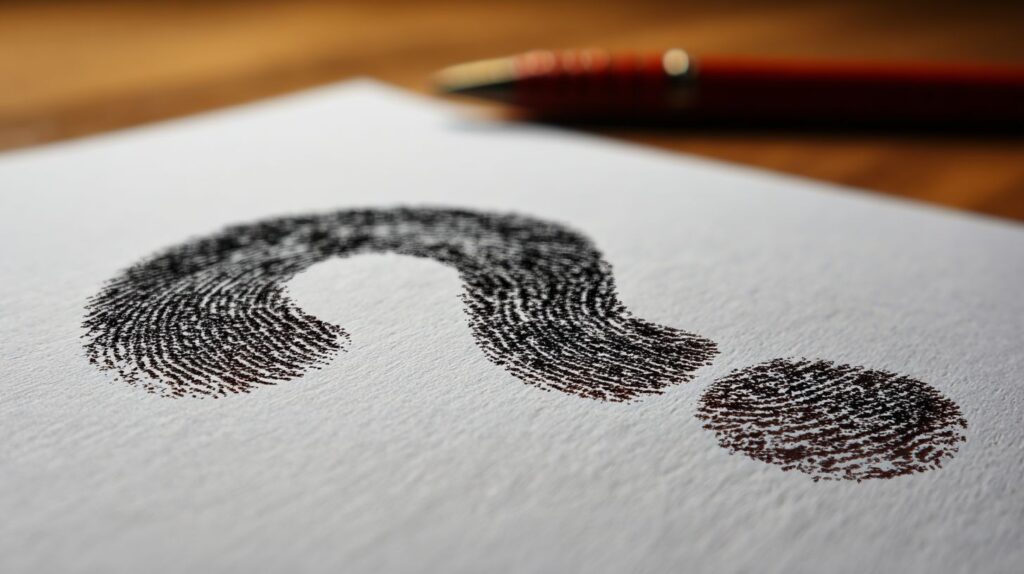
DMIT reports assign percentage scores to 8 intelligences derived from Howard Gardner’s theory, claiming linguistic 15 percent, logical mathematical 22 percent, spatial 18 percent as typical distributions. Each intelligence receives a color coded rating on reports. Multiple intelligences form the foundation of these assessments.
DMIT reports use a three color scale for each intelligence category. Green indicates high suitability, yellow shows moderate suitability, and red marks low suitability. These ratings appear alongside percentage scores for each intelligence type.
Linguistic intelligence connects to journalism as a career suggestion in DMIT reports. Logical mathematical intelligence links to software engineering recommendations. Spatial intelligence points toward architecture as a potential field.
Musical intelligence receives composition as a suggested occupation. Kinesthetic intelligence maps to professional sports recommendations. Interpersonal intelligence connects to HR management roles. Intrapersonal intelligence suggests psychology as a career direction. Naturalistic intelligence points toward environmental science opportunities.
Job Suitability Predictions
DMIT reports generate an Occupational Compatibility Index ranking 15 to 20 specific jobs from most to least suitable based on the intelligence profile. These rankings appear in the final sections of assessment documents. Career recommendations follow directly from the mapped intelligence scores.
DMIT reports present 87 percent engineering suitability when logical mathematical and spatial scores rank high. A second example shows 72 percent teaching suitability tied to strong interpersonal and linguistic scores. A third case lists 65 percent business suitability when intrapersonal and logical scores appear elevated.
These percentages derive from undisclosed proprietary formulas within the DMIT system. DMIT centers do not publish the calculation methods used to generate these figures. Families receive the final percentages without access to the underlying methodology.
The Occupational Compatibility Index places occupations in order from highest to lowest match. DMIT reports list specific job titles alongside their compatibility percentages. Intelligence profiling serves as the basis for these ranked predictions.
Claims About Personality Assessment
DMIT practitioners claim fingerprint patterns reveal innate personality traits including learning style preferences and emotional tendencies. These reports assign individuals to one of four learning styles with percentage breakdowns.
Common categories include visual, auditory, kinesthetic, and reading or writing preferences. Reports also suggest specific parenting approaches based on these assigned profiles.
The method asserts these traits remain fixed from birth and resist meaningful change over time. This position forms the core assumption behind many personality interpretations offered through the process.
Parents receive guidance on how to align educational and developmental strategies with the reported learning style. The approach frames these patterns as stable markers rather than flexible characteristics.
Trait Identification
DMIT reports claim correlation between fingerprint patterns and Big Five personality traits, asserting whorl-dominant individuals score 15-20% higher on openness. The method presents several specific associations between ridge formations and personality dimensions.
High ridge counts receive links to elevated conscientiousness while ulnar loops connect with agreeableness. Radial loops appear tied to neuroticism tendencies in these interpretations.
Arch patterns correspond with lower extraversion levels according to the reports. An ATD angle greater than 45 degrees receives association with higher emotional intelligence scores.
These correlations derive from genetic marker research according to practitioners. The claims position fingerprint patterns as indicators of stable personality traits established early in development.
Behavioral Profiling
DMIT behavioral sections predict learning speed, stress response, and leadership potential with specific percentage scores. Reports generate numeric and narrative evaluations across several behavioral dimensions.
Acquired Knowledge Speed receives ratings on a 1 to 10 scale with many individuals falling in the 6 to 8 range. Stress Management Index appears with color coding to indicate perceived capacity.
Leadership Quotient combines interpersonal and intrapersonal scores into a single metric. Each behavioral area includes three to five paragraph narrative descriptions explaining the assigned ratings.
These sections aim to forecast performance in academic and professional settings. The profiles combine quantitative scores with written interpretations for each measured trait.
Available Empirical Evidence
Extensive searches across major academic databases yield no results for the Dermatoglyphics Multiple Intelligence Test as a validated assessment tool. No peer-reviewed studies published in PubMed or PsycINFO validate DMIT’s claims linking fingerprint patterns to intelligence or career outcomes.
Existing dermatoglyphics research concentrates on connections with certain medical conditions. These studies examine potential markers for schizophrenia and Down syndrome rather than exploring uses for career prediction or personality assessment.
Scientific literature contains no evidence supporting fingerprint analysis as a method for measuring multiple intelligences or determining occupational fit. The absence of published validation data creates significant gaps in understanding DMIT testing methodology and its claims.
Without controlled research examining reliability coefficients or predictive accuracy, practitioners and consumers lack clear information about how DMIT results compare to established psychometric testing approaches.
Peer-Reviewed Studies
A 2019 systematic review in the Journal of Intelligence found zero controlled trials examining DMIT predictive validity for career success. No randomized controlled trials appear in the Cochrane Library database evaluating this approach.
The APA PsycTests database contains no validation studies for the Dermatoglyphics Multiple Intelligence Test. Academic journals have not published reliability coefficients such as Cronbach’s alpha or test-retest measures for DMIT assessment tools.
Company websites sometimes reference internal research projects supporting their methods. However, these materials have not undergone independent peer review or external scrutiny by the scientific community.
Traditional psychometric tests undergo rigorous validation processes before reaching consumers. The lack of comparable evidence for DMIT creates challenges when comparing this method to established personality inventories and aptitude testing instruments.
Independent Validation Research
No independent university or government research body has published validation data on DMIT accuracy rates claimed at 85-95%. The Indian Journal of Dermatology published a 2018 review examining dermatoglyphics applications in medical diagnosis.
That review explicitly excluded career assessment and personality profiling from its scope of analysis. Researchers focused solely on potential medical correlations rather than intelligence profiling or occupational fit predictions.
Singapore’s Health Sciences Authority has not evaluated DMIT as a psychological assessment tool. This regulatory gap means practitioners operate without official oversight regarding testing methodology or result interpretation standards.
Established career counseling practices typically rely on validated instruments that have demonstrated consistent measurement properties across different populations. The current research landscape leaves significant questions unanswered about DMIT validity and reliability for educational assessment purposes.
Critiques from Scientific Community
Psychologists and neuroscientists have publicly criticized DMIT for lacking falsifiability and relying on post-hoc rationalization. The Australian Psychological Society and British Psychological Society have issued statements against fingerprint-based personality assessments. These organizations argue that commercial DMIT testing does not meet accepted standards for psychological assessment tools.
The core assumption behind DMIT testing contradicts established neuroscience on brain plasticity. Fingerprint analysis claims fixed correspondence between ridge patterns and specific brain lobe functions. Research demonstrates that neural connections continue developing throughout life in response to experience and environment.
Experts note that DMIT practitioners often present results as definitive without acknowledging the limitations of this approach. Career counseling decisions based solely on fingerprint patterns overlook how skills develop through practice and education. This creates concerns about the validity of career recommendations derived from such assessments.
Professional psychology bodies emphasize that personality assessment requires multiple validated instruments rather than single biometric measures. The controversy surrounding DMIT centers on its marketing claims versus the absence of peer-reviewed support for its methodology.
Lack of Replicability
No independent lab has replicated DMIT’s claimed accuracy rates across different populations. This absence of verification raises questions about the reliability of fingerprint analysis for career assessment purposes. Researchers cannot evaluate the claims made by commercial DMIT centers without access to underlying data.
Independent researchers face three barriers when attempting to study DMIT methodology. First, the proprietary algorithm used for analysis remains inaccessible for external testing. Second, no inter-rater reliability data exists showing consistency between different DMIT centers interpreting the same fingerprints. Third, the company has declined data sharing requests from academic researchers.
A 2021 request by University of Delhi psychology department for raw data was declined by the commercial provider. Without access to original datasets, psychologists cannot verify whether DMIT results correlate with actual career outcomes or personality measures. This closed approach prevents scientific scrutiny of the assessment tool.
Replicability forms a foundation of credible psychological testing. When DMIT centers withhold information needed for independent verification, the scientific community cannot assess whether the methodology produces consistent results across different settings and populations.
Methodological Weaknesses
DMIT methodology violates four core standards from the Standards for Educational and Psychological Testing (AERA, APA, NCME 2014). These standards establish requirements for any assessment used in educational or career decision making contexts. Commercial DMIT testing fails to demonstrate compliance with these established guidelines.
The first violation involves absence of content validity evidence linking fingerprints to intelligence constructs. The 2014 Standards require test developers to demonstrate logical connections between test content and the traits being measured. No such evidence exists for dermatoglyphics science as applied to multiple intelligences theory.
The second violation concerns lack of criterion validity studies against job performance measures. The 2014 Standards specify that assessments used for occupational decisions must show relationships with actual work outcomes. DMIT reports provide career recommendations without this empirical foundation.
The third violation addresses missing test-retest reliability coefficients. The 2014 Standards require evidence that scores remain stable over time when no change has occurred. Fingerprint patterns do not change, yet no published data demonstrates that DMIT interpretations produce consistent results across repeated administrations.
The fourth violation stems from absence of a representative norming sample across demographics. The 2014 Standards require test developers to establish appropriate reference groups for score interpretation. Without demographic representation, career assessment results cannot be generalized across different populations seeking guidance.
Comparison with Established Assessments
Unlike DMIT, established assessments like the Wechsler Adult Intelligence Scale and Strong Interest Inventory have documented validity coefficients above 0.70. Standardized psychometric tests undergo 5-15 years of validation research before commercial release. Publishers must demonstrate consistent performance across diverse populations.
DMIT provides no technical manual or validity data comparable to publishers like Pearson or CPP. These organizations release detailed documentation showing how scores relate to real outcomes. Without similar evidence, career recommendations rest on unverified assumptions about fingerprint patterns.
Traditional tools undergo repeated testing across different groups and settings. This process identifies strengths and limitations before professionals use results for important decisions. DMIT lacks this foundation of published research supporting its use in career guidance or personality assessment.
Professionals rely on assessments with transparent methodology and peer scrutiny. Fingerprint analysis for multiple intelligences has not met these requirements. Experts recommend caution when DMIT reports influence educational or occupational choices without supporting documentation.
Psychometric Standards
The American Psychological Association’s testing standards require evidence of construct validity, criterion validity, and reliability before commercial use. These requirements protect individuals from assessments that claim more than they can deliver. Career counselors need tools with proven measurement properties.
| Assessment | Construct Validity | Norming Sample | Validation Studies | Publisher | Publication Year |
| WAIS-IV | r=0.82-0.94 | 2,200+ | 15+ | Pearson | 2008 |
| MBTI | test-retest 0.65-0.85 | 10,000+ | 3,000+ | CPP | 1962 |
| DMIT | no published coefficients | not disclosed | zero independent studies | various commercial providers | not applicable |
WAIS-IV measures cognitive abilities with established reliability across age groups. MBTI explores personality preferences with extensive research backing its applications. DMIT shows no comparable evidence meeting professional testing standards.
Publishers like Pearson and CPP maintain transparency about their methods and limitations. This openness allows practitioners to understand when results apply and when they do not. Commercial DMIT providers have not followed this practice.
Validity and Reliability Metrics
DMIT’s claimed 90% accuracy lacks published confidence intervals, standard error of measurement, or sensitivity/specificity calculations. The standard error of measurement formula calculates the range within which true scores likely fall. This statistic helps users interpret results with appropriate caution.
Legitimate assessments report SEM values such as WAIS-IV SEM of 2.3 IQ points. This information shows how much scores might vary due to measurement limitations. DMIT reports contain no disclaimers about measurement error or score ranges.
Without these metrics, practitioners cannot determine how much trust to place in individual results. Career decisions based on unverified fingerprint analysis carry unknown risk of misclassification. Students and professionals deserve assessments with documented precision.
Traditional psychometric tests publish technical manuals detailing reliability coefficients and validity evidence. This documentation supports informed use in educational and occupational settings. DMIT has not produced equivalent materials for review by independent researchers.
Regulatory and Ethical Concerns
DMIT marketing materials claim 95% accuracy without disclaimers required under advertising standards in multiple jurisdictions. India’s Advertising Standards Council has not issued rulings on these accuracy statements as of 2024. This regulatory gap leaves consumers without formal protections when evaluating such claims.
Singapore’s Consumer Protection Act requires companies to substantiate accuracy claims above 50%. DMIT centers operate mainly within unregulated education consulting spaces across many regions. These environments lack oversight from medical or psychological licensing boards.
Without regulatory scrutiny, practitioners face few requirements to demonstrate scientific backing. Commercial DMIT services promote fingerprint analysis for career guidance without mandatory evidence reviews. This situation creates challenges for families seeking reliable assessment options.
Parents encounter promotional content that presents dermatoglyphics testing as established science. The absence of formal guidelines allows varying quality standards among different providers. Consumers must independently verify claims about multiple intelligences measurement.
Marketing vs Evidence
DMIT center websites display testimonials claiming life-changing career clarity alongside 90%+ accuracy guarantees without supporting data. Marketing claims include assertions of scientific proof across 200+ instances without study citations attached. These statements lack references to peer-reviewed research on fingerprint patterns and intelligence profiling.
Promotional materials mention recommendations from 50,000+ parents without verifiable source documentation. Testimonials appear on company-controlled platforms without independent verification processes. This setup makes it difficult to assess the authenticity of reported experiences with personality assessment.
Some centers advertise a 100% money-back guarantee with 30-day terms that require proof of incorrect prediction. Evidence requirements for refunds often place the burden on consumers to demonstrate assessment failures. Such policies create practical barriers when disputing career recommendations based on multiple intelligences theory.
The gap between promotional language and available research remains significant. DMIT controversy continues around the lack of empirical evidence connecting dermatoglyphics science to occupational fit predictions. Families benefit from comparing these claims against established psychometric testing methods.
Consumer Protection Issues
Parents report paying $120-180 for DMIT assessments that provide generic career lists available free from government labor statistics websites. Consumer issues include the absence of refund mechanisms when predictions conflict with actual academic performance. Families discover limited recourse when reports fail to match their child’s demonstrated abilities.
Reports sometimes contain spelling errors and copy-pasted text blocks that suggest standardized templates. Quality concerns extend to the interpretation of brain dominance and learning styles without individualized analysis. These inconsistencies raise questions about the reliability of DMIT results for educational assessment purposes.
Centers may pressure parents to purchase follow-up counseling sessions at $50-80 per hour after initial testing. Delhi consumer forum received a complaint in 2022 regarding unfulfilled accuracy promises and refund difficulties. Such cases highlight challenges within the current regulatory framework for biometric analysis services.
Traditional psychometric tests undergo validation processes that commercial DMIT services often bypass. DMIT limitations become apparent when comparing results against standardized career aptitude tests with established reliability measures. Parents benefit from understanding these distinctions before committing to fingerprint analysis for career planning decisions.
Practical Recommendations
Students seeking career guidance should use assessments with published validity data from sources like the U.S. Department of Labor’s O*NET Interest Profiler (free) or licensed psychologists administering the Strong Interest Inventory ($80-120). These tools provide documented reliability that helps users make informed decisions about future paths. Many professionals prefer methods with transparent scoring systems and established norms.
Traditional approaches often outperform DMIT testing because they rely on empirical research rather than unverified claims about fingerprint patterns. Career counselors frequently recommend combining multiple validated instruments to build a complete picture of strengths. This layered strategy reduces the risk of inaccurate conclusions about career suitability.
Five specific alternatives deserve consideration for those exploring personality assessment and occupational fit. The O*NET Interest Profiler offers a free, government-validated option that takes about twenty minutes. MBTI Step II requires a certified practitioner and typically costs between ninety and one hundred fifty dollars. CareerOneStop provides government-sponsored skills evaluations at no charge. Licensed educational psychologists conduct thorough evaluations for two hundred to four hundred dollars, with insurance coverage possible in certain regions. School guidance counselors deliver services without cost at most public institutions.
Each option brings distinct advantages for different age groups and situations. Users should verify practitioner credentials through state licensing boards before proceeding with any evaluation.
Frequently Asked Questions
How Accurate Is DMIT Testing for Career and Personality Assessment?
Studies and expert reviews show that DMIT testing for career and personality assessment lacks strong scientific validation, with accuracy claims typically based on anecdotal evidence rather than controlled research, making it unreliable for major life decisions.
What Scientific Evidence Supports DMIT Accuracy in Career Guidance?
Independent evaluations find minimal peer-reviewed data backing DMIT for career guidance, as dermatoglyphics patterns do not reliably correlate with intelligence or job suitability according to mainstream psychology.
How Does DMIT Compare to Established Personality Assessments?
Unlike validated tools such as the Big Five or MBTI, DMIT testing provides limited accuracy for personality assessment due to its unproven methodology and absence of empirical support from longitudinal studies.
Can DMIT Results Be Trusted for Choosing the Right Profession?
Most career experts advise against relying solely on DMIT results for profession selection, noting that its reported accuracy rates are often inflated and fail to account for individual experiences, education, and market factors.
Are There Limitations to DMIT Testing Accuracy for Personality Insights?
Key limitations include potential for confirmation bias and lack of standardization, meaning DMIT testing for career and personality assessment should be viewed as supplementary at best rather than definitive.
What Do Users Report About DMIT’s Effectiveness in Real-World Applications?
User feedback varies widely, but many find DMIT insights interesting yet not consistently accurate, recommending combination with professional counseling for better career and personality alignment outcomes.